Table Index
Table index files normally live in the index directory and are referenced through an
index manifest. Configured external paths or
index-file-in-data-file-dir can change their location. These indexes differ from
per-file column indexes.
This page specifies dynamic-bucket hash indexes and deletion vectors. For global query indexes,
see Global Index and the
index manifest metadata. To inspect the index files of a table, query
the table_indexes system table.
Dynamic Bucket Index
A dynamic-bucket index tracks the primary-key hashes assigned to a bucket. Each index file stores a sequence of 4-byte, big-endian hash values; the index manifest identifies the partition and bucket to which the file belongs.
hash_0 (4 bytes) | hash_1 (4 bytes) | hash_2 (4 bytes) | ...
Deletion Vectors
A deletion vector records deleted row positions in a data file. A deletion file stores zero or more serialized deletion vectors. The index manifest metadata maps each data file to its vector's offset, length, and cardinality; the binary payload itself does not contain file names.
Bucketed primary-key tables maintain deletion files per bucket when deletion vectors are enabled. Other write paths can group vectors into files according to the configured target size.
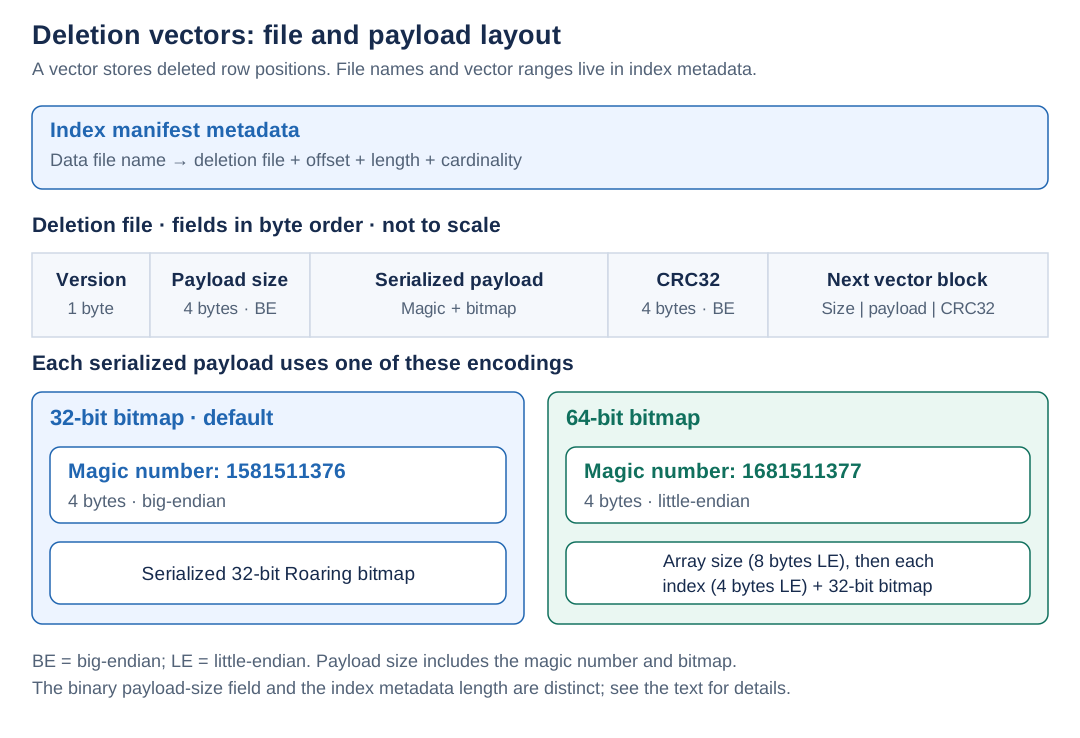
The deletion file is a binary file, and the format is as follows:
- First, record version by a byte. Current version is 1.
- Then, repeat
payload size | serialized payload | CRC32 checksumfor each vector. - Payload size and checksum are 4-byte BIG_ENDIAN integers. The payload includes its magic number.
The payload-size field above is distinct from the vector length recorded in index metadata. In the current format, the metadata length for a 32-bit vector counts only the payload; for a 64-bit vector it also counts the 4-byte size field and the 4-byte checksum.
For each serialized bin, its serialization format is determined by deletion-vectors.bitmap64.
Paimon will use a 32-bit bitmap to store deleted records by default, but if deletion-vectors.bitmap64 is set to true, a 64-bit bitmap will be used.
Serialization of the two bitmaps is different. Note that only 64-bit bitmap implementation is compatible with Iceberg.
Serialized bin for 32-bit bitmap:(default)
- First, record a const magic number by an int (BIG_ENDIAN). Current the magic number is 1581511376.
- Then, record a 32-bit serialized bitmap. Which is a RoaringBitmap (org.roaringbitmap.RoaringBitmap).
Serialized bin for 64-bit bitmap:
- First, record a const magic number by an int (LITTLE_ENDIAN). Current the magic number is 1681511377.
- Then, record a 64-bit serialized bitmap. Which supports positive 64-bit positions (the most significant bit must be 0),
but is optimized for cases where most positions fit in 32 bits by using an array of 32-bit Roaring bitmaps. The internal bitmap array is grown as needed to accommodate the largest position.
The serialization of the 64-bit bitmap is as follows:
- First, record the size of bitmaps array by a long (LITTLE_ENDIAN).
- Then, record the index by an int (LITTLE_ENDIAN) and serialized bytes of each bitmap in the array in sequence.